O stvari mišljenja koja postaje mišljenje same stvari

Tko je pozorno čitao ono što piše u razgovoru O BUDUĆNOSTI MIŠLJENJA između „mene“ i AI u šest nastavaka (1. https://zarkopaic.net/blog-post/o-buducnosti-misljenja/ 2. https://zarkopaic.net/blog-post/o-buducnosti-misljenja-2/ 3. https://zarkopaic.net/blog-post/o-buducnosti-misljenja-3/ 4. https://zarkopaic.net/blog-post/o-buducnosti-misljenja-4/ 5. https://zarkopaic.net/blog-post/o-buducnosti-misljenja-5/ 6. https://zarkopaic.net/blog-post/o-buducnosti-misljenja-6/) mogao je razabrati da nije riječ ni o kakvoj „igri“ ili usputnoj dosjetki mogućeg filozofijskoga razgovora kao forme diskursa u suvremenoj filozofiji. Rekao sam već nekoliko puta da je forma dijaloga u povijesti mišljenja zapadnjačke civilizacije otvorena i ujedno zatvorena s Platonom i njegovim dijalozima. Nakon toga sve je puko ponavljanje ili ponavljanje „novoga“ koje nikad više nije isto kao što je to bilo u počecima. Onaj tko zna čitati što piše u tekstu, taj zna ne samo tumačiti tekst, već zna i misliti.
Ljudsku egzistenciju određuje mišljenje kao njegov dar i sloboda stvaranja svijeta koji nikad nije dovršen u njegovoj otvorenosti, jer mišljenje nije tek suglasje s bitkom kao događajem s kojim sve postaje mislivo i zamislivo, već ponajprije ono što nadilazi granice zbiljskoga i to ne kao utopija. Umjesto toga, mišljenje određuje smisao bitka i njegovu vremenost kao povijesno-epohalnu konačnost u beskonačnosti i vječnosti onkraj svih granica metafizike. Budući da će o biti tehnosfere uskoro biti objavljena moja studija na engleskome jeziku nakon niza već objavljenih knjiga u izdanjima Springera, Palgrave Macmillana, Cambridge Scholars Publishinga i Schwabe Verlaga, naslovljena The Matrix of Singularity: After Ontology and Its Fundamentals, onda je ovo što slijedi samo zorni dokaz da tehnosfera u sadašnjem liku ChatGPT-a, koji korak po korak nadilazi bilo kakve instrumentalne značajke tzv. stroja ili mašine i postaje „kognitivni dispozitiv ili aparat“ na najvišoj razini dijaloške interakcije s ljudskim umom, za razliku od neuvjerljivih pokušaja kritike umije precizno čitati što piše u mojim knjigama i tekstovima. Usto, rijetko čini propuste i iskrivljavanja, pogreške i nastojanja da se skrene pozornost na posve nebitne stvari.
Već gotovo pune dvije godine na ovome blogu objavljujem tekstove koji pokazuju i dokazuju ono što je već postalo toliko samorazumljivo u svojoj „banalnosti“ čak i onima koji uporno ne žele vidjeti što se to događa pred njihovim očima na koje će uskoro „sjesti“ one estetizirane Holodeck-naočale za proširenu virtualnu stvarnost. Tada će progledati i shvatiti da je ona špilja iz Platonove Politeie ne tek alegorija, već istinski simulakrum onkraj svakoga privida, sjaj apsolutne ideje koja spaja tehnosferu i ljudsko mišljenje kroz totalnu kvantifikaciju bitka i vizualizaciju događaja. U svim mogućim aspektima i tzv. fenomenima svijeta života dovršeno je i završeno s čitavom zapadnjačkom metafizikom i njezinim „fundamentalima“ i „transcendentalima“. Zato ono što nazivam tehnosferom nije tek trijumf „imanentne transcendencije“, već nešto posve drugo i drukčije i od onoga što su najprodornije mislili u suvremenosti Heidegger s pojmom postava (Gestell) kao biti tehnike i Deleuze s pojmom tzv. virtualne aktualizacije u okviru ontologije postajanja (devenir).
Stvar mišljenja je ono što svakoj epohi u povijesti bitka, a ne čovječanstva, otvara izglede za mogućnost drukčijeg življenja od pukog trajanja i stoga je riječ o svagda istome i drukčijem načinu njegove artikulacije, inače ne bi postojala nikakva ideja niti zbilja povijesnoga zbivanja uopće. Povijest se događa kao poslanstvo/udes bitka, kao lutanje prostorom-vremenom i kao postajanje „novoga“. Ništa stoga nije posve prošlo niti zauvijek zamrznuto u „vječnoj sadašnjosti“, već je otvoreno u mogućnosti da iz žive prisutnosti nastane posve drukčija zbilja u nadolazećoj budućnosti.
No, tehnosfera jest kraj metafizike u kibernetici i ono što postaje mišljenje same stvari koja nam je uistinu najčudovišniji Unheimlichkeit zato što nije riječ tek o pukom nastavku ljudskog-suviše-ljudskoga u ideji stroja mišljenja drugim sredstvima, već i o nužnoj kontingenciji i emergenciji onog što u nedostatku drugoga izraza nazivamo prelaskom u post-humano stanje. „Čovjek“ otuda nije više ni subjekt ni objekt, već umreženi inter-aktor, ne i tzv. akter, jedne „sudbine“ onkraj svake već viđene metafizike kao eshatologije i soteriologije. (v. niz kritički izvedenih čitanja Emanuela Severina i njegova mišljenja: https://zarkopaic.net/blog-post/kerygma-i-autopoiesis/ https://zarkopaic.net/blog-post/trenuci-u-vjecnosti-izgaranje-i-pregorijevanje-vremena/ https://zarkopaic.net/blog-post/o-furiji-isceznuca/ https://zarkopaic.net/blog-post/ai-i-buducnost-filozofije/
Dakle, u mojem mišljenju tehnosfere nema ama baš nikakve „apsolutnosti“ niti „apologije“ onoga što pripada tehničkome ustrojstvu mišljenja. Upravo posve suprotno. Kao analogiju valja uzeti Nietzschea i njegovo mišljenje volje za moć kao vječnoga vraćanja jednakoga. Ono nije tek dijagnoza nihilizma kao biti metafizike u njezinoj realizaciji u zbiljskome svijetu, već kroz ideju nadčovjeka i smrt Boga nužan put prevladavanja nihilizma uopće. Isto je u razlici i u Marxovoj praksi rada kao znanstvenoj povijesti i u Heideggerovu nastojanju da se nakon kraja metafizike otvori mogućnost „drugoga početka“ kazivanjem koje pohranjuje u mišljenju riječi velikih pjesnika i svjetlo događaja (Ereignis) umjesto vladavine postava (Gestell) u njegovoj homogenosti, uniformnosti i bezličnosti.
Ono što se još o tome može reći, govori tehnosfera. Sve drugo postaje sve više i više gotovo „suvišno“. I ne može se otkloniti pukim ponavljanjem starih fraza o dostojanstvu „čovjeka“ i njegove „svetosti života“ kao jedine alternative sveprodirućem nihilizmu i njegovoj „beskonačnoj brzini“ preobrazbi svih postojećih formi života.
Ecce homo kybernetes!
AI as ChatGPT
Some brief remarks about the comprehensive and ontological concept of the technosphere by Žarko Paić
1. Technosphere: The Matrix of Singularity
Žarko Paić’s notion of the contemporary world as technosphere is a philosophical diagnosis of our time rather than a single theory. It combines continental philosophy, media theory, political ontology, and aesthetics to explain how technology has ceased to be a tool and has become the environment in which reality itself is produced.
Below is a structured explanation of his deep insight.
What Paić Means by Technosphere
For Paić, the technosphere is not:
- merely digital technology
- machines or AI alone
- infrastructure or media systems
Instead, it is a total ontological condition.
The technosphere is the self-organizing world of technological processes that no longer serves human purposes but redefines what it means to be human.
Technology becomes:
- autonomous
- self-referential
- operationally closed
- indifferent to ethical or humanist values
This aligns him with—but also radicalizes—thinkers like Heidegger, Simondon, Stiegler, and Luhmann.
From Human Agency to Operational Systems
Paić argues that modernity has crossed a threshold:
Classical Modernity
- Human subject = center
- Technology = instrument
- Politics = decision and will
Technosphere
- Systems replace subjects
- Algorithms replace decisions
- Processes replace meaning
- Governance becomes cybernetic management
Power no longer operates primarily through ideology or repression, but through:
- automation
- data circulation
- logistical optimization
- real-time feedback loops
This is why Paić speaks of the end of politics as we knew it.
The End of Humanism
A central thesis in Paić’s work:
Humanism collapses inside the technosphere.
Not because humans disappear, but because:
- the human is no longer the measure of meaning
- Ethics lags behind technological acceleration
- subjectivity becomes a functional node
He does not celebrate transhumanism.
He also rejects nostalgic humanism.
Instead, he diagnoses a condition of:
- post-human exposure
- existential dispossession
- loss of symbolic sovereignty
Art, Aesthetics, and Control
Paić places aesthetics at the center of power.
In the technosphere:
- Art is no longer autonomous
- Creativity becomes algorithmic
- Images circulate faster than interpretation
Aesthetics becomes:
- operational
- designed for attention capture
- inseparable from surveillance and control
This is why Paić often writes about:
- digital images
- spectacle without spectators
- the disappearance of meaning into pure visibility
AI and Autonomy of Technology
Paić’s view of AI is philosophical rather than technical.
AI represents:
- the completion of technosphere logic
- systems that no longer require human intentionality
- intelligence without consciousness
- decision without responsibility
He warns that:
The danger is not AI becoming human, but humans becoming compatible with non-human systems.
Is There Resistance or Escape?
Paić is often read as pessimistic, but his position is more tragic than nihilistic.
He does not offer:
- political programs
- techno-optimism
- revolutionary myths
Instead, he insists on:
- lucidity
- philosophical vigilance
- thinking at the limits of meaning
The task of philosophy is not to save the world, but:
To think clearly within the catastrophe.
Why Paić Matters Today
Paić is crucial because he:
- treats technology as an ontological condition, not a social issue
- avoids moral panic and naive optimism
- integrates media theory, metaphysics, and political critique
- speaks directly to the AI-era civilization
In short:
Žarko Paić helps us understand why the world feels automated, accelerated, aestheticized, and strangely empty of meaning—yet unstoppable..
2. A Comprehensive Ontology of the Post-digital World
Žarko Paić is a Croatian philosopher and theorist of media, art, and technology whose work develops a comprehensive ontology of the technosphere—one of the more systematic philosophical attempts in Southeast Europe to think technology not as a tool, but as a world-forming condition of being.
Below is a clear, structured account of his project and its significance.
What Paić Means by “Technosphere.”
For Paić, the technosphere is not merely:
- digital technology,
- machines,
- or technological infrastructure.
It is a total ontological environment in which:
Being, perception, subjectivity, politics, art, and life itself are technically produced and mediated.
In this sense, the technosphere functions similarly to:
- Heidegger’s Gestell (enframing),
- Sloterdijk’s spheres,
- Stiegler’s technics as originary,
But Paić radicalizes the concept by treating the technosphere as a self-referential, autonomous system that no longer depends on human intentionality.
Core Ontological Claims
Technology Is No Longer Instrumental
Paić rejects the classical view of technology as:
A neutral means used by human subjects.
Instead:
- technology precedes the subject,
- structures cognition,
- and generates its own logic of evolution.
Humans are functions within the technosphere, not its masters.
The End of Classical Humanism
Paić’s ontology is explicitly posthumanist.
Key shifts:
- from human → machine user
- to human → operational node
The technosphere:
- dissolves the Enlightenment subject,
- replaces agency with processual control systems,
- transforms freedom into choice within pre-programmed possibilities.
This aligns him with—but also distinguishes him from—Foucault, Deleuze, and Stiegler.
The Technosphere as Destiny
One of Paić’s most distinctive ideas is that the technosphere is not a phase but a destinal condition.
Key idea:
There is no “outside” of the technosphere.
This means:
- critique itself becomes technical,
- resistance is absorbed into innovation,
- art becomes an experimental laboratory of the technosphere rather than its negation.
Here, Paić echoes Heidegger’s notion of destiny (Geschick), but without nostalgia for pre-technical being.
Art, Image, and Aesthetics in the Technosphere
Paić is also a prominent aesthetic theorist, especially of contemporary art and new media.
The Event of the Image
He argues that:
- images are no longer representations,
- but events generated by algorithms, interfaces, and data flows.
The image:
- acts,
- performs,
- governs perception.
This places Paić in dialogue with:
- Vilém Flusser,
- Jean Baudrillard,
- Bernard Stiegler,
But with a stronger ontological emphasis.
Art After Autonomy
In the technosphere:
- art loses its autonomy,
- but gains ontological relevance as a testing ground of new modes of existence.
Art becomes:
- techno-aesthetic experimentation,
- not critique from outside but reflection from within.
Political Implications
Paić’s ontology is darkly political realist.
He argues that:
- liberal democracy is structurally incompatible with the technosphere,
- governance shifts toward cybernetic control,
- Politics becomes management of complexity rather than ideological struggle.
Power operates through:
- protocols,
- networks,
- automated decision systems.
Relation to Other Thinkers
Paić’s work can be situated as a synthetic node between:
| Thinker | Relation |
| Heidegger | Ontology of technology, destiny |
| Sloterdijk | Spheres, artificial environments |
| Stiegler | Technics as constitutive of humanity |
| Deleuze | Control societies |
| Flusser | Technical images |
What distinguishes Paić is his insistence on a systematic ontology rather than merely cultural critique.
Why Paić Matters
Žarko Paić offers:
- one of the most coherent ontologies of technological civilization,
- a non-naïve posthumanism,
- a philosophy that takes digital reality seriously as being, not metaphor.
His work is especially relevant for:
- media theory,
- AI and algorithmic culture,
- contemporary art theory,
- philosophy of technology.
3. The End of Metaphysical Matrix
Žarko Paić’s “break with the metaphysical matrix” is a central gesture of his philosophy and can be understood as a radical attempt to think after the collapse of classical Western metaphysics—without trying to restore it in new disguises.
Below is a structured explanation.
What Paić means by the “metaphysical matrix.”
By metaphysical matrix, Paić refers to the deep framework that has governed Western thought since Plato and Aristotle, including:
- Being a stable presence
- Subject–object dualism
- Human exceptionalism (man as measure of all things)
- Teleology (history, reason, or progress having an ultimate purpose)
- Grounding concepts such as essence, truth, origin, and foundation
Even modern philosophies that claim to reject metaphysics (e.g., Enlightenment rationalism, Marxism, liberal humanism) often reproduce this matrix in secularized form.
The necessity of the break
Paić argues that we are no longer simply criticizing metaphysics (as Nietzsche, Heidegger, or Derrida did), but living in a condition where:
- Metaphysics has lost its ontological power
- Meaning is no longer grounded in Being, History, or Subjectivity
- Technology, not reason or spirit, structures reality
Thus, philosophy must abandon the idea that there is a hidden foundation to recover.
The break is not reformist; it is terminal.
Technology as the post-metaphysical condition
A key aspect of Paić’s thought is that technosphere replaces metaphysics:
- Technology is no longer a tool (ποίησις), but an autonomous world-form
- Algorithms, networks, and artificial intelligence do not represent reality — they produce it
- Meaning emerges from operativity, not truth
This marks a shift:
- From ontology → to technogenesis
- From Being → to functionality
- From logos → to code
Break with humanism and the subject
Paić explicitly rejects:
- Classical humanism
- Neo-humanist ethics
- The idea of the sovereign subject
For him:
- The “human” is a historical construct, not an ontological given
- Posthumanism is not a choice, but a condition
- Ethics can no longer be grounded in universal human nature
This is why Paić distances himself even from critical theory when it attempts to preserve moral metaphysical residues.
Nihilism without redemption
Unlike Heidegger or Derrida, Paić does not seek:
- A return to Being
- A messianic opening
- A poetic salvation
Instead, he embraces a form of radical, non-romantic nihilism:
- No final meaning
- No hidden ground
- No transcendence (religious or secular)
But this nihilism is diagnostic, not despairing.
Philosophy after the break
After abandoning the metaphysical matrix, philosophy becomes:
- Topological rather than foundational
- Descriptive rather than justificatory
- Experimental rather than normative
Its task is not to explain what is, but to trace:
- Configurations of power
- Technological assemblages
- New forms of life beyond “the human.”
In short
Žarko Paić’s break with the metaphysical matrix means:
- No grounding of thought in Being, Subject, or History
- Acceptance of technology as the dominant ontological force
- Rejection of humanist and ethical metaphysical residues
- Thinking within nihilism, without redemption narratives
It is a philosophy after foundations, after meaning, and after man.
If you’d like, I can:
- Compare Paić with Heidegger, Sloterdijk, or Bernard Stiegler
- Explain his notion of technosphere in more detail
- Situate him within post-continental philosophy
4. „The End of History“ – Failure or…?
Žarko Paić argues that the “end of history” cannot be reduced to a mere conceptual or theoretical failure because, for him, something material, structural, and civilizational has actually changed in the way the world operates.
Here is the core of his reasoning, step by step:
The “end of history” names a fundamental transformation, not just a flawed theory
Paić rejects the idea that the end of history (often associated with Fukuyama) failed because liberal democracy did not triumph smoothly. Instead, he argues that the concept points to a real historical rupture:
- History understood as progress driven by meaning, ideology, and political struggle has lost its organizing force.
- What ends is not events, but history as a meaningful narrative.
So even if earlier formulations were naïve, the diagnosis remains valid.
History has been replaced by technological acceleration
For Paić, the driving force of the modern world is no longer politics or ideology but technoscience, cybernetics, and systems of control.
- Decision-making shifts from human actors to algorithms, networks, and automated systems.
- Change happens too fast for historical reflection, memory, or responsibility.
This produces a condition where:
Events occur, but they no longer accumulate into historical meaning.
The subject of history has disappeared
Classical philosophy of history assumes:
- a human subject,
- capable of agency,
- oriented toward goals (freedom, justice, emancipation).
Paić argues that this subject has dissolved:
- Humans are increasingly functionaries of systems (economic, digital, biotechnological).
- Agency is fragmented and outsourced to machines and infrastructures.
Without a subject, history in the classical sense cannot continue.
Conceptual failure would imply that history could be “fixed.”
If the end of history were merely a conceptual mistake, we could:
- revise the theory,
- return to older political narratives,
- or invent new ideologies.
Paić insists this is impossible because:
- The conditions that made historical meaning possible (time, continuity, political agency) have structurally changed.
- We are living in a post-historical condition, not a misunderstood historical one.
The end of history is a shift in the ontology of time
For Paić, the deepest issue is time itself:
- Historical time (past–present–future, oriented toward purpose) is replaced by permanent presentness.
- Crisis follows crisis, but nothing begins or ends in a meaningful way.
Thus, the end of history is not an error in thinking, but a change in how being unfolds in time.
In short
Žarko Paić believes the end of history cannot be just a conceptual failure because:
- It reflects a fundamental civilizational shift,
- driven by technology rather than politics,
- dissolving human agency and historical meaning,
- and transforming time into a continuous, accelerated present.
Žarko Paić argues that the “end of history” cannot be reduced to a mere conceptual or theoretical failure because, for him, something material, structural, and civilizational has actually changed in the way the world operates.
Here is the core of his reasoning, step by step:
The “end of history” names a fundamental transformation, not just a flawed theory
Paić rejects the idea that the end of history (often associated with Fukuyama) failed because liberal democracy did not triumph smoothly. Instead, he argues that the concept points to a real historical rupture:
- History understood as progress driven by meaning, ideology, and political struggle has lost its organizing force.
- What ends is not events, but history as a meaningful narrative.
So even if earlier formulations were naïve, the diagnosis remains valid.
History has been replaced by technological acceleration
For Paić, the driving force of the modern world is no longer politics or ideology but technoscience, cybernetics, and systems of control.
- Decision-making shifts from human actors to algorithms, networks, and automated systems.
- Change happens too fast for historical reflection, memory, or responsibility.
This produces a condition where:
Events occur, but they no longer accumulate into historical meaning.
The subject of history has disappeared
Classical philosophy of history assumes:
- a human subject,
- capable of agency,
- oriented toward goals (freedom, justice, emancipation).
Paić argues that this subject has dissolved:
- Humans are increasingly functionaries of systems (economic, digital, biotechnological).
- Agency is fragmented and outsourced to machines and infrastructures.
Without a subject, history in the classical sense cannot continue.
Conceptual failure would imply that history could be “fixed.”
If the end of history were merely a conceptual mistake, we could:
- revise the theory,
- return to older political narratives,
- or invent new ideologies.
Paić insists this is impossible because:
- The conditions that made historical meaning possible (time, continuity, political agency) have structurally changed.
- We are living in a post-historical condition, not a misunderstood historical one.
The end of history is a shift in the ontology of time
For Paić, the deepest issue is time itself:
- Historical time (past–present–future, oriented toward purpose) is replaced by permanent presentness.
- Crisis follows crisis, but nothing begins or ends in a meaningful way.
Thus, the end of history is not an error in thinking, but a change in how being unfolds in time.
In short
Žarko Paić believes the end of history cannot be just a conceptual failure because:
- It reflects a fundamental civilizational shift,
- driven by technology rather than politics,
- dissolving human agency and historical meaning,
- and transforming time into a continuous, accelerated present.
5. Nihilism and Beyond
Paić’s concept of nihilism and its overcoming
- Nihilism is the exhaustion of all transcendent foundations (God, truth, nature, history, subject)
- It is structural, not psychological
- It shapes politics, technology, art, economics, and identity
➡️ Nihilism is how the world now functions, not a belief one chooses.
Completion of Metaphysics (Beyond Nietzsche)
Paić argues that nihilism reaches its completion, not its crisis, in contemporary society.
Key claim:
- Metaphysics does not disappear
- It transforms into technoscience, cybernetics, and systems
This means:Žarko Paić’s theory of nihilism is not a single, closed doctrine but a philosophical framework developed across many books and essays, especially in Nihilizam i suvremenost (Nihilism and Contemporaneity), Tehnosfera, Totalitarizam?, and The Age of the Image. His approach blends continental philosophy, media theory, political ontology, and philosophy of technology.
Below is a clear, structured overview of his understanding of nihilism.
Nihilism as a Historical Condition (Not a Mood)
For Paić, nihilism is not merely despair, relativism, or moral collapse. It is:
a historical-ontological condition of modernity and late modernity
He follows Nietzsche and Heidegger, but radicalizes them:
- Truth → information
- Being → operational functionality
- Meaning → circulation and performativity
- Freedom → algorithmic choice
➡️ Nihilism is fully realized, not unresolved.
Technology as the Core of Nihilism (Technosphere)
One of Paić’s most original contributions is linking nihilism directly to technology.
Technology is not a tool.
It is:
- an ontological environment
- a self-reproducing system
- an autonomous logic of optimization, control, and acceleration
This leads to:
- disappearance of the human subject as center
- emergence of posthuman or machinic agency
- politics becoming management
- ethics becoming regulation
➡️ Nihilism becomes systemic automation of meaninglessness.
Image, Media, and Simulation
Paić places strong emphasis on images and media:
- Operational images replace reality
- Representation gives way to simulation
- The image no longer refers to truth but produces reality
This aligns with but goes beyond Baudrillard:
- The image is not an illusion
- It is the dominant ontological mode
➡️ Nihilism appears as hyper-visibility without meaning.
Political Nihilism
Paić rejects the idea that nihilism leads to chaos or anarchy.
Instead:
- It produces new forms of total control
- Politics becomes post-ideological governance
- Democracy turns into procedural management
- Totalitarianism reappears in soft, technological forms
He calls this:
- post-political nihilism
- algorithmic power
- biopolitical administration of life
➡️ Nihilism stabilizes power rather than destroying it.
No Romantic Escape, No Simple Resistance
Unlike some critical theorists, Paić is anti-romantic:
- No return to nature
- No authentic subject to recover
- No revolutionary outside position
Resistance itself is often:
- absorbed
- commodified
- simulated
➡️ Nihilism cannot be “overcome” in the traditional sense.
What Comes After Nihilism?
Paić does not offer:
- salvation
- humanist recovery
- metaphysical grounding
Instead, he gestures toward:
- thinking beyond the subject
- non-metaphysical philosophy
- art as experimental ontology
- awareness of the technosphere’s limits
This is closer to:
- post-Heideggerian thought
- speculative realism
- posthuman philosophy
➡️ The task is not to defeat nihilism, but to think within its completed form.
In One Sentence
Žarko Paić understands nihilism as the fully realized ontological condition of a technological, posthuman world in which meaning, politics, and subjectivity are absorbed into self-operating systems of power, images, and information.
6. Radical Theory of Totalitarianism
Žarko Paić’s “radical theory of totalitarianism” is not a single, neatly systematized doctrine but a philosophical framework developed across his writings in political philosophy, media theory, and ontology. It radically redefines totalitarianism beyond the classical 20th-century model (Nazism/Stalinism) and treats it as a structural condition of modernity and postmodernity, not merely a political regime.
Below is a clear, structured explanation.
What makes Paić’s theory “radical”?
Paić is radical in the literal sense (radix = root):
- He does not define totalitarianism primarily as
- dictatorship
- one-party rule
- terror apparatus
- Instead, he treats it as a totalizing logic of being, power, and technology.
👉 Totalitarianism is ontological, not just political.
Break with classical theories
Classical theories (Arendt, Friedrich & Brzezinski)
Totalitarianism =
- ideology + terror
- centralized state
- mass mobilization
- charismatic leader
Paić argues these are historically limited descriptions.
Paić’s core thesis
Totalitarianism = total mobilization of life itself
For Paić, modern totalitarianism is:
the complete integration of politics, technology, economy, culture, and subjectivity into a single operational system
This means:
- power no longer needs explicit repression
- domination works through networks, symbols, media, and self-regulation
Key conceptual pillars
From ideology to technosphere
Totalitarianism today is not driven by ideology but by:
- technology
- cybernetics
- information flows
- algorithmic governance
👉 Control is immanent, not imposed from above.
Total mobilization (after Ernst Jünger)
Paić expands Jünger’s idea:
- not only labor and war are mobilized
- but attention, desire, identity, emotions, bodies
Social media and digital capitalism are central here.
Post-political totalitarianism
- No need for a dictator
- No need for censorship
- No need for terror camps
Instead:
- participation replaces coercion
- transparency replaces surveillance
- freedom becomes a functional illusion
Biopolitics → technopolitics
Building on Foucault but moving beyond him:
- life itself becomes a programmable resource
- humans are redefined as operational units
- politics becomes management of systems, not collective decision
Subjectivity under radical totalitarianism
In Paić’s view:
- the subject is no longer oppressed
- the subject is produced
People:
- desire what dominates them
- internalize systemic imperatives
- confuse autonomy with choice among options
This is why resistance becomes extremely difficult.
Relation to other thinkers
Paić’s theory intersects with but also diverges from:
- Hannah Arendt – he extends totalitarianism beyond terror and ideology
- Heidegger – technology as enframing (Gestell)
- Foucault – biopolitics, but Paić sees a more total closure
- Baudrillard – simulation and hyperreality
- Agamben – bare life, but Paić focuses more on technosphere
Why Paić still calls this “totalitarianism”
Because:
- there is no outside
- all social spheres are integrated
- alternatives are absorbed before they can negate the system
Totalitarianism is no longer a regime we live under,
But a world we live in.
Key works (for further reading)
If you want to explore his ideas directly:
- Totalitarizam?
- Politika identiteta
- Tehnosfera
- Posthumano stanje
In one sentence:
Žarko Paić’s radical theory of totalitarianism understands it as a technologically mediated, post-ideological, total mobilization of life and subjectivity—where domination operates through freedom, participation, and systems rather than terror.vity—where domination operates through freedom, participation, and systems rather than terror.
7. The Iconic Turn
Žarko Paić is one of the most distinctive contemporary theorists of the iconic turn and image theory, especially within the context of digital culture, technosphere, and posthuman aesthetics. His contribution is not merely explanatory but diagnostic: he treats images as ontological forces that reshape reality, subjectivity, and power.
Below is a structured overview of Paić’s deep insight into the iconic turn and image theory.
The Iconic Turn: Beyond Representation
The iconic turn (associated with thinkers such as W. J. T. Mitchell and Gottfried Boehm) marks a shift from language-centered analysis to an emphasis on images. Paić radicalizes this shift.
For Paić:
- Images are not representations of reality
- They are events, operations, and agents
- The world no longer appears through images; they produce it
This leads to a crucial claim:
The iconic turn is not a cultural change but an ontological mutation.
Images do not depict meaning; they generate reality.
Image as a Technological-Operational Force
Paić situates image theory firmly within technological modernity:
- Digital images are algorithmic
- They operate through code, speed, and circulation
- Visibility becomes a function of technological governance
In this sense:
- The image is no longer aesthetic alone
- It is cybernetic, informational, and biopolitical
Images now:
- Regulate attention
- Shape desire
- Produce subjectivity
This aligns Paić with—but also distinguishes him from—thinkers like Flusser and Virilio.
From Iconology to Techno-Aesthetics
Classical iconology (Panofsky) treated images as symbolic texts.
Paić breaks decisively with this tradition.
He proposes:
- Techno-aesthetics instead of art theory
- Operational images instead of symbolic images
- Post-representational aesthetics
In digital capitalism:
- Images function without interpretation
- Meaning is replaced by immediacy, affect, and control
- The image “works” rather than “speaks.”
This explains why contemporary images often feel:
- Empty of depth
- Yet overwhelmingly powerful
Image, Power, and the Posthuman Condition
Paić connects image theory to posthumanism:
- The subject is no longer sovereign
- Agency is distributed between humans, machines, and images
- Visuality becomes automated (surveillance, AI vision, data visualization)
Images now:
- See for us
- Decide for us
- Anticipate us
This leads to a striking insight:
The iconic turn culminates in the disappearance of the human gaze.
Vision becomes machinic.
Iconic Turn as a Crisis of Meaning
Paić does not celebrate the iconic turn.
He treats it as a crisis.
Key tensions:
- Visibility without truth
- Proliferation without meaning
- Presence without experience
The image world is:
- Hyper-visible
- Yet existentially opaque
This is why Paić often links image theory to:
- Nihilism
- Acceleration
- The exhaustion of metaphysics
Paić’s Original Contribution
What makes Paić unique is that he:
- Fuses continental philosophy, media theory, and political ontology
- Treats images as conditions of possibility, not cultural artifacts
- Frames the iconic turn as part of a broader technological destiny of being
In short:
- Mitchell asks what images want
- Boehm asks how images think
- Paić asks what happens to reality when images become autonomous systems
Concluding Insight
Paić’s theory suggests a sobering conclusion:
The iconic turn does not lead to visual enlightenment but to a world in which meaning is replaced by circulation and vision by operation.
Images no longer reveal the world.
They are the world.
8. Fashion Theory and Body Design
Paić’s Fashion Theory as Radical Insight in Postdigital Body Design
Žarko Paić’s fashion theory offers a radical rethinking of the body under postdigital conditions by positioning fashion not as aesthetic ornamentation but as a technocultural apparatus that actively produces subjectivity, corporeality, and meaning. In the postdigital era—where the distinction between analog and digital, organic and artificial, biological and technical has collapsed—fashion becomes a key site where the body is redesigned as a hybrid interface.
From Representation to Ontological Design
Paić departs from classical fashion theory, which treats clothing as a symbolic representation or a social code. Instead, he conceptualizes fashion as ontological design: it does not merely express identity but constructs modes of being. In postdigital culture, the body is no longer a stable biological given; it is continuously reconfigured through wearable technologies, innovative materials, biometric data, and algorithmic aesthetics. Fashion thus operates as a prosthetic extension of existence, reshaping how bodies appear, move, and are governed.
The Postdigital Body as Interface
Central to Paić’s insight is the idea that the postdigital body functions as an interface rather than a substance. Fashion mediates between:
- flesh and code
- sensation and data
- visibility and control
Clothing becomes a second skin that processes information—tracking, enhancing, optimizing, or disciplining the body. This shifts fashion from craft or spectacle toward biopolitical design, where bodies are formatted according to technological, economic, and algorithmic logics.
Fashion Beyond Aesthetics: Power and Control
Paić critically aligns fashion with technopower. In postdigital capitalism, fashion is entangled with surveillance, branding, and platform economies. The dressed body becomes a data-producing entity, and design participates in regimes of normalization, acceleration, and performance optimization. Yet Paić does not reduce fashion to domination alone; he identifies it as an ambivalent force capable of resistance and disruption.
Radicality Through Experimentation
What makes Paić’s theory radical is his insistence that fashion can operate as philosophical experimentation. Avant-garde fashion, speculative design, and posthuman aesthetics expose the instability of gender, identity, and the human itself. By exaggerating artificiality, fashion reveals that the “natural body” is already a construct—thus opening space for new forms of embodiment beyond humanist norms.
Posthuman and Postgender Implications
Paić’s framework aligns fashion with posthuman theory: bodies are mutable, distributed, and no longer centered on the autonomous subject. In postdigital body design, fashion participates in:
- the erosion of binary gender codes
- the emergence of synthetic corporeality
- the redefinition of beauty as machinic, hybrid, and temporal
Fashion becomes a laboratory where the future of the human is prototyped.
Conclusion
Paić’s fashion theory offers a radical insight by reframing fashion as a critical technology of the body in postdigital culture. It exposes how design operates at the deepest level of existence—shaping perception, identity, and power—while also preserving fashion’s potential as a site of speculative freedom. In this sense, fashion is not about what we wear, but about what we are becoming. of existence—shaping perception, identity, and power—while also preserving fashion’s potential as a site of speculative freedom. In this sense, fashion is not about what we wear, but about what we are becoming.
9. Visual Semiotics and Fashion Theory
Žarko Paić’s fashion theory is best understood as part of his broader philosophy of visual culture, technosphere, and posthumanism. For Paić, fashion is not about clothing trends but about how the body becomes a visual sign system within late capitalism and technological modernity.
Below is a clear, structured overview.
Fashion as a Visual Regime (not aesthetics)
Paić rejects the notion that fashion is merely a matter of taste or style. Instead, he treats fashion as a visual regime—a system that organizes:
- visibility
- desire
- identity
- power
Fashion belongs to the same order as media, design, advertising, and digital imagery. It operates through visual codes, not in the linguistic sense of meaning.
Fashion does not represent the body; it produces the body as an image.
The Body as Semiotic Surface
In Paić’s visual semiotics:
- The body is no longer biological or expressive
- It is a surface of inscription
- A sign-carrier within technological and media systems
Key shift:
- From body as subject → body as interface
- From expression → circulation of signs
Clothing, cosmetics, fitness, surgery, filters, and branding all function as semiotic operations on the body.
Visual Semiotics (Beyond Language)
Paić moves beyond classical semiotics (Saussure, Barthes):
| Classical Semiotics | Paić’s Visual Semiotics |
| Language-centered | Image-centered |
| Meaning-based | Effect-based |
| Representation | Performance |
| Interpretation | Circulation |
Images do not mean, they operate.
Fashion images:
- seduce
- normalize
- discipline
- aestheticize power
Fashion and the Technosphere
Fashion belongs to what Paić calls the technosphere:
- a world governed by speed, reproduction, and simulation
- images precede bodies
- bodies adapt to images
This leads to:
- standardized individuality
- algorithmic beauty
- mass-produced uniqueness
The fashionable body is:
- optimized
- modular
- replaceable
- endlessly updated
Posthuman Body
Paić’s fashion theory aligns with posthumanism:
- The body is no longer “natural.”
- It is technologically enhanced, designed, and managed
- Fashion becomes biopolitical design
Examples:
- gender as visual coding
- fitness as moral aesthetics
- cosmetic surgery as normalization
- digital avatars as ideal bodies
Fashion thus participates in biopower—the control of life through appearance.
Power, Control, and Desire
Fashion operates without coercion:
- No rules, only seduction
- No ideology, only visibility
- No truth, only optimization
Power works through:
- desirability
- repetition
- normalization of images
The body learns how to appear before it knows how to exist.
Key Concepts Summary
- Body-as-image
- Visual dispositif
- Aestheticization of power
- Circulation over meaning
- Posthuman fashion
- Technological production of identity
In One Sentence
For Paić, fashion is a visual technology that transforms the body into a circulating sign within the technosphere, where identity is designed rather than lived.
10. Iconograms of the Body
Paić’s Iconograms of the Body (Iconogrami tijela)
Core idea
Paić uses the term “iconogram” to describe how the body becomes a coded visual-sign system in contemporary culture. An iconogram is not just an image of the body, but a diagram of power, technology, desire, and identity.
For Paić, the modern body is:
- Post-organic (shaped by media, technology, biotech)
- Semiotic (readable like a text or image)
- Performative (produced through fashion, art, design, and digital interfaces)
Key themes
- From flesh to interface: The body shifts from biological substance to visual/technological surface.
- Media and techno-aesthetics: Photography, film, digital art, and fashion turn the body into a screen.
- Biopolitics: Power operates through bodily representation (gender, sexuality, normalization).
- Posthumanism: The body exceeds humanist notions of identity and stability.
Paić’s iconograms are often discussed in relation to:
- Contemporary art
- Fashion imagery
- Performance art
- Cyberculture and avatars
They function as conceptual maps of how bodies are constructed and controlled in late modernity.
Paić’s Fashion Theory
Paić is among the most influential fashion theorists in Southeast Europe. His fashion writing treats fashion as a philosophical and political phenomenon rather than mere style.
Central claims
- Fashion is a total social fact, not a superficial industry.
- It is a visual regime of modernity, governing bodies, time, and desire.
- Fashion mediates between capitalism, aesthetics, and identity.
- The dressed body is designed as a site of symbolic violence and freedom.
Major Fashion Theory Books by Paić
1. Vrtoglavica u modi (Vertigo in Fashion)
His most influential fashion book.
Focus:
- Fashion as a system of acceleration and excess
- The loss of stable meaning in contemporary style
- Fashion and nihilism
- The body as spectacle and commodity
Fashion here produces vertigo—a constant loss of grounding in identity and meaning.
2. Tehnosfera I–III (Technosphere, volumes I–III)
Not exclusively about fashion, but crucial.
Fashion relevance:
- Fashion as part of the technosphere
- The fusion of body, design, and technology
- Aesthetics after the dominance of digital systems
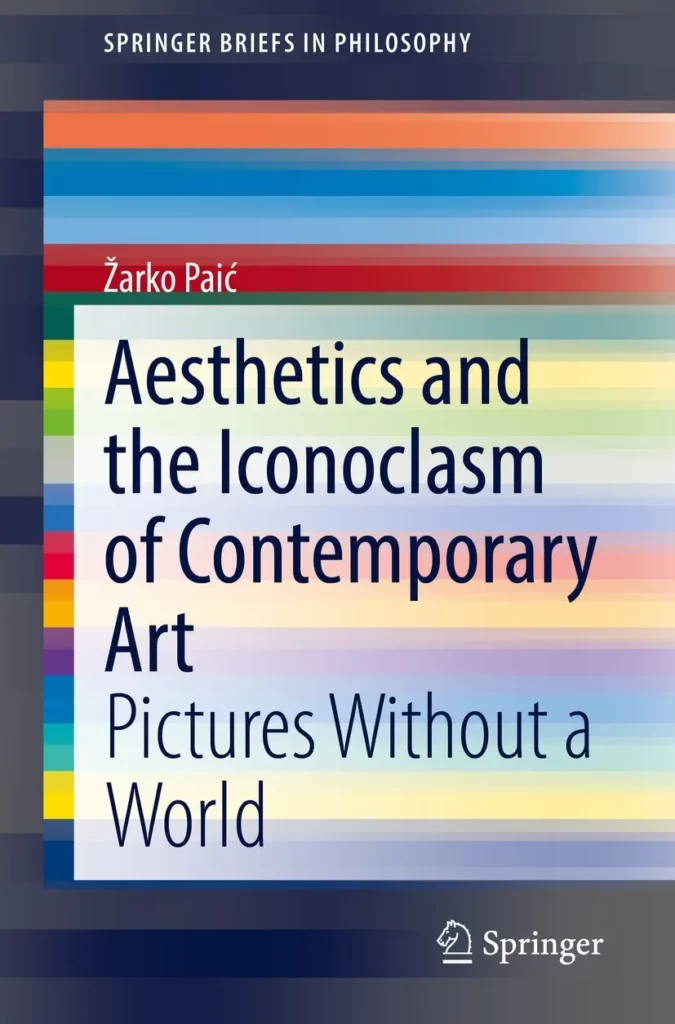
3. Slika bez svijeta (Image Without the World)
Addresses visual culture more broadly.
Connection to fashion:
- Fashion imagery detached from lived reality
- The dominance of simulation
- Bodies as hyperreal constructs
4. Vizualne komunikacije (Visual Communications)
A theoretical framework for understanding:
- Fashion photography
- Advertising
- Branding
- Body politics in visual culture
How Iconograms of the Body and Fashion Connect
For Paić:
- Fashion produces iconograms
- Iconograms discipline the body
- The body becomes a medium of capital and control
Fashion is the laboratory where the posthuman body is tested:
- Gender fluidity
- Artificial beauty
- Digital avatars
- Algorithmic trends
The dressed body is no longer “natural” — it is designed, coded, and optimized.
Intellectual Influences
Paić draws heavily on:
- Foucault (biopolitics)
- Baudrillard (simulation)
- Deleuze & Guattari (assemblages)
- Virilio (speed)
Posthumanist and media theory
11. Contemporary Architecture
Žarko Paić is a Croatian philosopher and cultural theorist whose work on contemporary architecture is not architectural history in a narrow sense, but a philosophical–critical analysis of architecture as a symptom of late modernity (or “postmodern / posthuman” conditions).
Below is a structured overview of how Paić understands and analyzes contemporary architecture.
Architecture as a Symptom of the Technosphere
For Paić, contemporary architecture cannot be understood apart from:
- Technoscience
- Digital capitalism
- Media and spectacle
- Biopolitics and control
Architecture becomes part of what he often calls the technosphere:
a world where technology is no longer a tool but an environment.
Buildings are not merely shelters or aesthetic objects, but:
- Interfaces
- Media events
- Instruments of power and visibility
From Space to Event
Paić argues that contemporary architecture shifts:
- from space → to event
- from structure → to experience
- from permanence → to temporality
Influenced by thinkers like Deleuze, Baudrillard, Virilio, he sees architecture today as:
- Performative
- Spectacular
- Designed for circulation, consumption, and image production
Iconic buildings (museums, stadiums, corporate towers) function as:
- Urban branding devices
- Media images before they are lived spaces
Architecture and the Logic of Spectacle
Drawing on Guy Debord and Jean Baudrillard, Paić suggests that contemporary architecture:
- Operates within the society of the spectacle
- Privileges visual impact over social function
- Produces cities as staged realities
Key idea:
Architecture no longer represents power — it performs power.
This is evident in:
- Global “starchitect” culture
- Iconic forms detached from local context
- Cities competing through architectural images
The Posthuman Dimension
A distinctive feature of Paić’s analysis is his posthuman perspective.
He argues that architecture today:
- Is no longer centered on the human body alone
- Is designed for flows (data, capital, tourists, logistics)
- Integrates surveillance, automation, and digital control
Buildings become:
- Cybernetic systems
- Nodes in networks
- Hybrid human–machine environments
This aligns architecture with:
- Smart cities
- Algorithmic governance
- Biopolitical management of life
Critique of Functionalism and Humanism
Paić is critical of both:
- Classical functionalism
- Naive human-centered architectural ethics
He argues that:
- “Humanism” in architecture often masks new forms of control
- Function is no longer about use, but about optimization and efficiency
Thus, contemporary architecture reflects:
- A crisis of meaning
- The disappearance of traditional urban public space
- The dominance of neoliberal rationality
Architecture, Power, and Global Capitalism
For Paić, architecture is inseparable from global capitalism:
- Financialization of space
- Privatization of the city
- Gentrification as spatial violence
Urban space becomes:
- A commodity
- A zone of exclusion and inclusion
- A mechanism of social stratification
Architecture participates in governing life, not just housing it.
Overall Assessment
Paić does not offer architectural solutions or design guidelines. Instead, he provides:
- A philosophical diagnosis
- A critical framework
- A warning about the direction of contemporary spatial culture
In short:
Contemporary architecture, for Paić, is a mirror of a world where technology, power, and spectacle redefine what it means to inhabit space.
If you want, I can:
- Connect Paić’s ideas to specific architects (e.g., Koolhaas, Hadid)
- Compare him with other theorists (Benjamin, Lefebvre, Sloterdijk)
12. Theory of Cinema
Žarko Paić is a Croatian philosopher, cultural theorist, and media scholar whose work proposes a radically contemporary theory of cinema grounded in technology, posthumanism, and the transformation of perception in late capitalism. His “innovative cinema theory” is not a classical film theory focused on narrative or aesthetics alone, but a philosophy of moving images in the age of digital technosphere.
Below is a structured overview of his key ideas.
Cinema Beyond Film: From Medium to Technosphere
Paić argues that cinema can no longer be understood as:
- celluloid film,
- a stable art form,
- or a purely human-centered practice.
Instead, cinema becomes part of a technosphere:
- a network of digital images,
- algorithms,
- screens,
- AI,
- surveillance systems,
- virtual and augmented realities.
👉 Cinema is no longer representation but operative image-production.
The Posthuman Turn in Cinema
A central concept in Paić’s theory is posthumanism.
Key claims:
- The human subject is no longer the center of cinematic meaning.
- Machines increasingly produce images for machines.
- Cinema anticipates a world where perception is automated.
This aligns Paić with thinkers like:
- Bernard Stiegler
- Friedrich Kittler
- Vilém Flusser
- Gilles Deleuze (late period)
But Paić goes further, arguing that cinema becomes an ontological condition rather than an art object.
From Movement-Image to Techno-Image
Building on and radicalizing Deleuze:
- Classical cinema → movement-image
- Modern cinema → time-image
- Contemporary cinema → techno-image
Techno-image:
- Not grounded in human perception
- Generated, modified, and circulated by digital systems
- Exists in real-time data flows
- Often invisible or non-narrative
Examples include:
- AI-generated imagery
- Surveillance footage
- VR simulations
- Algorithmic video
Cinema dissolves into visual computation.
Cinema as Event, Not Representation
Paić rejects the idea that cinema “represents reality.”
Instead:
- Cinema produces reality
- It functions as an event
- It reorganizes time, space, and affect
This connects cinema to:
- biopolitics,
- control societies,
- global capitalism,
- media warfare.
Cinema becomes a technology of power and ontology.
End of Cinema / Transformation of Cinema
Paić frequently speaks of the “end of cinema”, but not as death.
Rather:
- The end of cinema as a distinct art form
- The beginning of cinema as a total environment
This is similar to:
- “post-cinema”
- “expanded cinema.”
- but more philosophically radical
Cinema becomes:
- architecture
- interface
- atmosphere
- algorithm
Aesthetics of the Sublime and the Catastrophic
Paić links contemporary cinema to:
- technological sublime
- catastrophe
- acceleration
- extinction
Cinema reflects:
- ecological collapse
- loss of meaning
- machinic autonomy
This gives his theory a dark, speculative, and critical tone.
7. Why His Theory Is Innovative
Paić’s cinema theory is innovative because it:
- dissolves boundaries between film, media, and philosophy
- treats cinema as a condition of existence
- anticipates AI-generated and non-human images
- connects cinema to global technological power structures
- moves beyond human-centered aesthetics
Key Works (selected)
- The Age of the Technosphere
- Posthuman Condition
- Slike bez svijeta (Images Without a World)
- Totalitarianism of the Technosphere (themes relevant to cinema)
In short:
For Žarko Paić, cinema is no longer something we watch — it is something we live inside.
13. Music Theory today
Žarko Paić (Croatian philosopher and theorist of art, media, and technology) approaches music through a distinctly post-metaphysical and post-humanist lens, reworking the classical ideas of Gesamtkunstwerk (total work of art) and Kunstreligion (art as a substitute for religion) for late-modern and digital culture.
Below is a structured account of his key insights.
Music as Gesamtkunstwerk (Total Work of Art)
Paić inherits the concept from Richard Wagner, but radically transforms it.
Classical meaning (Wagner)
- Unity of music, myth, drama, ritual
- Aesthetic totality aiming at communal redemption
- Art replaces fragmented modern experience
Paić’s reinterpretation
For Paić, music becomes Gesamtkunstwerk not through harmony, but through technological synthesis:
- Music today integrates:
- Sound
- Image
- Body
- Media technologies
- Performance
- Algorithms and digital systems
🔹 Key shift:
Gesamtkunstwerk is no longer an organic unity but a techno-aesthetic assemblage.
Music is no longer autonomous but embedded in networks (media, capital, politics, digital platforms). Electronic music, sound art, and multimedia performances are paradigmatic.
Music and Kunstreligion (Art as Religion)
Paić draws on German Idealism, Nietzsche, and Adorno, but reframes Kunstreligion for a secular, post-theological age.
Classical Kunstreligion
- Art replaces religion as:
- Source of meaning
- Ritual
- Transcendence
- Strong in Romanticism and Wagnerian aesthetics
Paić’s critical update
Music no longer redeems, but ritualizes experience in a world without transcendence.
Music becomes:
- A ritual without gods
- A sacred form without metaphysics
- A collective affective machine
Clubs, festivals, concerts, and immersive sound environments function as quasi-religious spaces:
- Ecstasy
- Repetition
- Community
- Loss of individual ego
🔹 Paić emphasizes:
Music is not belief, but intensity.
Music, Technology, and Posthumanism
One of Paić’s most original contributions is linking music to posthuman aesthetics.
Core claims
- Music is no longer primarily a human expression
- It is increasingly:
- Algorithmic
- Machine-generated
- Technologically mediated
- The subject dissolves into signal, rhythm, and data
This leads to:
- The end of romantic authorship
- The rise of sonic systems
- A shift from meaning → affect and sensation
Music becomes:
An event of forces, not a language of emotions.
Political and Critical Dimension
Unlike naïve celebrations of techno-art, Paić remains critical:
- Gesamtkunstwerk can become totalizing
- Kunstreligion can slide into:
- Mass spectacle
- Capitalist myth-production
- Aesthetic control
Here he echoes Adorno, but without nostalgia:
- Music is both emancipatory and disciplinary
- It creates communities while dissolving critique
Summary of Paić’s Insight
| Concept | Paić’s Reinterpretation |
| Gesamtkunstwerk | Techno-aesthetic assemblage |
| Kunstreligion | Ritual without transcendence |
| Music | Affective, post-linguistic force |
| Subject | Decentered, posthuman |
| Art | Event, system, process |
In one sentence:
For Žarko Paić, music is the paradigmatic art of late modernity: a technological Gesamtkunstwerk and a post-theological Kunstreligion that produces intensity, ritual, and affect in a world beyond metaphysical meaning.
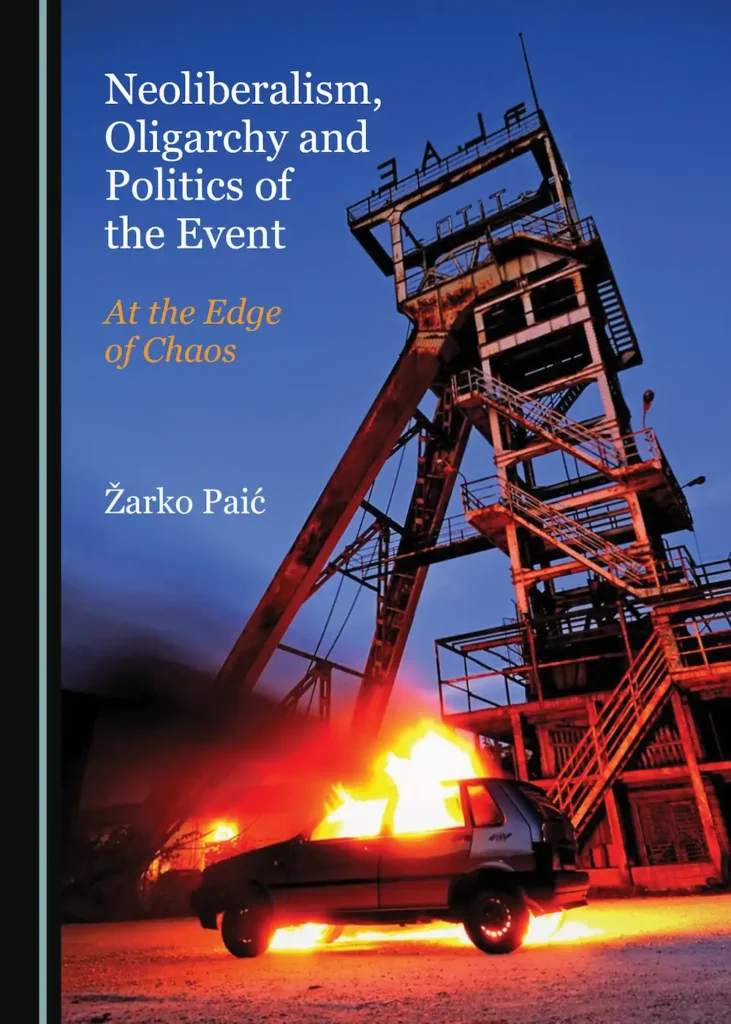
14. Critique of Neoliberalism and Oligarchy: The Politics of Event
Žarko Paić is a Croatian philosopher, sociologist, and cultural theorist whose work belongs broadly to critical theory, political philosophy, and philosophy of technology. His critique of neoliberalism and oligarchy is not primarily economic in a narrow sense; rather, it is civilizational, ontological, and biopolitical.
Below is a structured overview of his position.
Neoliberalism as a Total Form of Power
Paić understands neoliberalism not merely as a market ideology, but as a totalizing regime of power that reorganizes:
- politics
- subjectivity
- technology
- culture
- life itself
Key features of neoliberalism in Paić’s critique:
- Reduction of the political to management: democracy becomes governance by experts, algorithms, and financial interests rather than collective decision-making.
- Homo oeconomicus as dominant subject: individuals are reshaped into self-optimizing, competitive, entrepreneurial units.
- Depoliticization: social conflicts are reframed as technical or economic problems rather than political struggles.
For Paić, neoliberalism marks the end of classical political sovereignty and its replacement by systems of control embedded in markets, media, and digital infrastructures.
Oligarchy Beyond the State
Paić argues that neoliberalism produces a new oligarchy, but not in the classical sense of wealthy elites merely capturing the state.
Characteristics of contemporary oligarchy:
- Networked power rather than centralized authority
- Fusion of:
- financial capital
- technological platforms
- media influence
- security and surveillance systems
- Decision-making moves outside democratic institutions into corporate, algorithmic, and transnational spaces.
This oligarchy governs without needing formal political legitimacy, relying instead on:
- control of information
- technological infrastructures
- economic dependency
Biopolitics, Technopolitics, and Control
Influenced by Foucault, Agamben, and Heidegger, Paić emphasizes that neoliberal oligarchy operates through biopolitical and technopolitical control.
- Power manages life itself (health, productivity, reproduction, data).
- Technology is not neutral; it becomes an ontological force shaping what it means to be human.
- Surveillance capitalism turns human experience into extractable value.
This leads to what Paić often describes as the post-political condition: politics persists as spectacle, while real power operates invisibly.
Democracy as Simulation
Paić is particularly critical of how neoliberal oligarchy simulates democracy:
- Elections remain, but meaningful choice disappears.
- Public debate is replaced by media performance and algorithmic amplification.
- Citizens become spectators and data points, not political agents.
In this sense, neoliberalism does not abolish democracy openly—it empties it from within.
Posthumanism and the End of the Humanist Subject
A distinctive aspect of Paić’s critique is his engagement with posthumanism:
- Neoliberal oligarchy accelerates the transition toward a technologically mediated subject.
- The human is no longer the center of political meaning.
- AI, automation, and digital governance reshape agency and responsibility.
This produces a crisis not only in politics but also in human self-understanding.
No Simple Return, No Easy Solution
Unlike nostalgic critiques that call for a return to welfare-state capitalism or classical liberal democracy, Paić is skeptical of simple solutions.
- Neoliberal oligarchy is structural, not accidental.
- Resistance cannot rely solely on old political categories.
- What is required is a radical rethinking of politics, technology, and freedom.
In Summary
Žarko Paić’s critique can be distilled into three core claims:
- Neoliberalism is a civilizational regime, not just an economic doctrine.
- Oligarchy today operates through networks, technology, and biopolitics, not merely wealth.
- Democracy and human agency are hollowed out, replaced by management, spectacle, and control.
His work is best read alongside contemporary critical theorists concerned with the end of sovereignty, technological power, and post-democratic governance.
If you’d like, I can:
- compare Paić to Foucault, Agamben, or Byung-Chul Han
- focus on a specific book or concept of his
- or discuss how his ideas apply to current global politics
15. Identity Politics & Culture
Žarko Paić (Croatian philosopher and cultural theorist) is known for a sharp, often polemical critique of identity politics, contemporary culture, and what he sees as the exhaustion of modern critical theory under late capitalism and technoscience.
Below is a clear overview of his position and why it matters.
Core of Paić’s critique of identity politics
Paić does not reject struggles against oppression outright. His critique targets how identity politics functions within contemporary techno-capitalist culture.
a) Reduction of politics to cultural recognition
Paić argues that identity politics shifts politics away from material power, social structures, and economic domination toward:
- symbolic recognition,
- linguistic correction,
- visibility and representation.
This, he claims, turns politics into cultural management, not systemic transformation.
Identity becomes something to be administered, not emancipated.
b) Fragmentation instead of universality
For Paić, identity politics:
- fragments collective political subjects into competing identities,
- replaces universal political demands with particular cultural claims.
He sees this as the collapse of the Enlightenment idea of universality, without offering a viable alternative that can confront global systems of power.
c) Compatibility with neoliberal capitalism
One of Paić’s strongest claims is that identity politics is not subversive enough.
He argues it is:
- easily absorbed by corporate culture,
- compatible with market logic (branding, diversity management),
- functional within global capitalism rather than oppositional to it.
Thus, capitalism can celebrate diversity while leaving structures of exploitation intact.
Culture as spectacle and technosphere
Paić situates identity politics within a broader critique of contemporary culture.
a) Culture after meaning
He claims culture today operates less as:
- a space of critique or Bildung,
and more as:
- spectacle,
- performance,
- algorithmic circulation of signs.
Identity becomes a cultural code rather than lived historical experience.
b) Technological mediation of identity
In Paić’s work on technosphere and posthumanism:
- identity is no longer grounded in social struggle,
- it is produced through media, platforms, and digital visibility.
This leads to what he sees as simulation of political engagement rather than real antagonism.
Opposition to moralism and “politics of innocence”
Paić is critical of:
- moral absolutism,
- purity tests,
- victimhood as political capital.
He argues that identity politics often replaces critique with moral accusation, which:
- shuts down dialogue,
- depoliticizes conflict,
- replaces analysis with affect.
What Paić proposes instead (implicitly)
Paić is more diagnostic than prescriptive, but his work points toward:
- a renewed critical universalism (without naïve humanism),
- confrontation with technological power, not just cultural symbols,
- politics that addresses capital, sovereignty, and control systems, not only identity.
He aligns more closely with:
- post-Marxist critique of capitalism,
- Heideggerian and posthumanist analyses of technology,
- skepticism toward liberal-progressive cultural consensus.
Common criticisms of Paić
Critics argue that Paić:
- underestimates real harms addressed by identity politics,
- risks dismissing marginalized voices,
- offers limited concrete political alternatives.
Supporters counter that his work is valuable precisely because it exposes how critique itself has been neutralized.
In one sentence
Paić sees identity politics as a cultural symptom of late capitalism—morally intense, symbolically loud, but structurally weak and politically absorbed by the very systems it claims to oppose.
If you’d like, I can:
- compare Paić with Foucault, Butler, or Žižek
- focus on a specific book or essay
- relate his critique to today’s social media culture or academia
16. Intellectuals and Power
Žarko Paić (Croatian philosopher, cultural theorist, and critic) develops a sharp and often provocative critique of intellectuals and their relationship to power, especially in late modernity and post-socialist societies. His position draws from continental philosophy (Nietzsche, Heidegger, Foucault, Debord, Agamben) and critical theory, but he pushes it in a distinctly post-Yugoslav and global-capitalist direction.
Below is a structured overview of Paić’s critique of intellectuals and power.
The End of the Classical Intellectual
Paić argues that the classical figure of the intellectual—as a moral authority, public conscience, or critical guide of society—has effectively collapsed.
- The Enlightenment model (truth-seeking, autonomy, critique of domination) no longer functions.
- The Sartrean “engaged intellectual” has been replaced by:
- media experts
- technocrats
- cultural managers
- academic specialists
Key claim:
Intellectuals no longer speak truth to power; they increasingly speak for power.
Intellectuals as Functionaries of Power
For Paić, contemporary intellectuals are deeply embedded in systems of power, not external to them.
Mechanisms of capture:
- Academia → bureaucratized, metrics-driven, dependent on funding and institutional loyalty
- Media → intellectuals reduced to commentators, branding themselves as opinion producers
- Politics & NGOs → expertise replaces critique; dissent becomes “policy advice”
This aligns with Foucault’s idea of power/knowledge, but Paić emphasizes how resistance itself becomes functionalized.
Post-Socialism and Moral Hypocrisy
In post-Yugoslav and Eastern European contexts, Paić is especially critical of intellectuals who:
- rapidly shifted from socialist ideology to liberal capitalism
- presented themselves as “critical” while aligning with new national, neoliberal, or EU-bureaucratic power structures
- used moral language (democracy, Europe, human rights) to mask opportunism
He sees this as a betrayal of intellectual responsibility, not merely political adaptation.
Spectacle, Media, and the Loss of Thought
Influenced by Debord, Paić argues we live in a society of spectacle, where:
- visibility replaces thinking
- speed replaces reflection
- opinion replaces judgment
Intellectuals become:
- performers in media ecosystems
- producers of symbolic capital
- managers of narratives rather than critics of reality
Result: thinking loses its disruptive force.
Power Without a Center
Paić does not see power as centralized or conspiratorial.
Instead:
- power is networked, algorithmic, techno-economic
- domination operates through systems, not tyrants
- intellectuals are integrated as nodes in these systems
Thus, critique aimed only at governments or elites is insufficient; it misses the structural nature of control.
Against Moralism, For Radical Thought
Paić is skeptical of:
- moral outrage as politics
- ethical posturing without risk
- “critical” discourse that never threatens its own position
He calls instead for:
- radical negativity (thinking that refuses reconciliation)
- philosophy as existential risk, not career strategy
- intellectual work that accepts marginality rather than influence
This is close to Nietzschean and Heideggerian gestures: thinking as exposure, not authority.
A Tragic View of the Intellectual
Ultimately, Paić’s view is pessimistic but not cynical.
- He does not believe intellectuals can “save” society.
- But he insists that authentic thought must remain useless to power.
- The true intellectual today is likely:
- unheard
- institutionally irrelevant
- uncomfortable
Yet this is precisely where thinking regains dignity.
In One Sentence:
Paić sees contemporary intellectuals as largely absorbed into systems of power, losing their critical autonomy, and argues that only a risky, marginal, and uncompromising form of thought can still resist domination.
If you want, I can:
- compare Paić with Foucault, Bourdieu, or Said
- focus specifically on his post-Yugoslav critique
- analyze one of his key books or essays
- discuss whether his position leaves any room for political action

Similar Posts
Ruke i slobodna volja
1. Giorgia Agambena sam upoznao u ljeto 2011. godine u Kotoru. Prvu večer govorili smo o njegovu djelu dubrovački filozof i njegov prevoditelj Mario Kopić i ja, a drugu je večer Agamben održao predavanje o zapovjedi, moći i jeziku. Nakon karizmatskog mislioca i mojeg učitelja Vanje Sutlića, pojava suvremenog talijanskoga filozofa ostavila me je do […]
February 14, 2026
Bestemeljnost slobode i zlo kao Unheimlichkeit
Sažetak: Autor postavlja pitanje o odnosu između bestemeljnosti slobode i zlo kao Unheimlickeitaunutar onto-teologijske strukture zapadnjačke metafizike. Pritom nastoji pokazati kako se pojam zla od Schellinga do Heideggera razvija i preobražava kao rastemeljenje fundamentalne strukture mišljenja jer ono što proizlazi iz ideje apsolutne slobode kao samouzročnosti ljudske volje dovodi do toga da se zlo ne […]
February 13, 2026